These observations are prompted by the mystical feelings I have for this computer, which was the first one I saw on coming out of the egg in 1961, age 28.
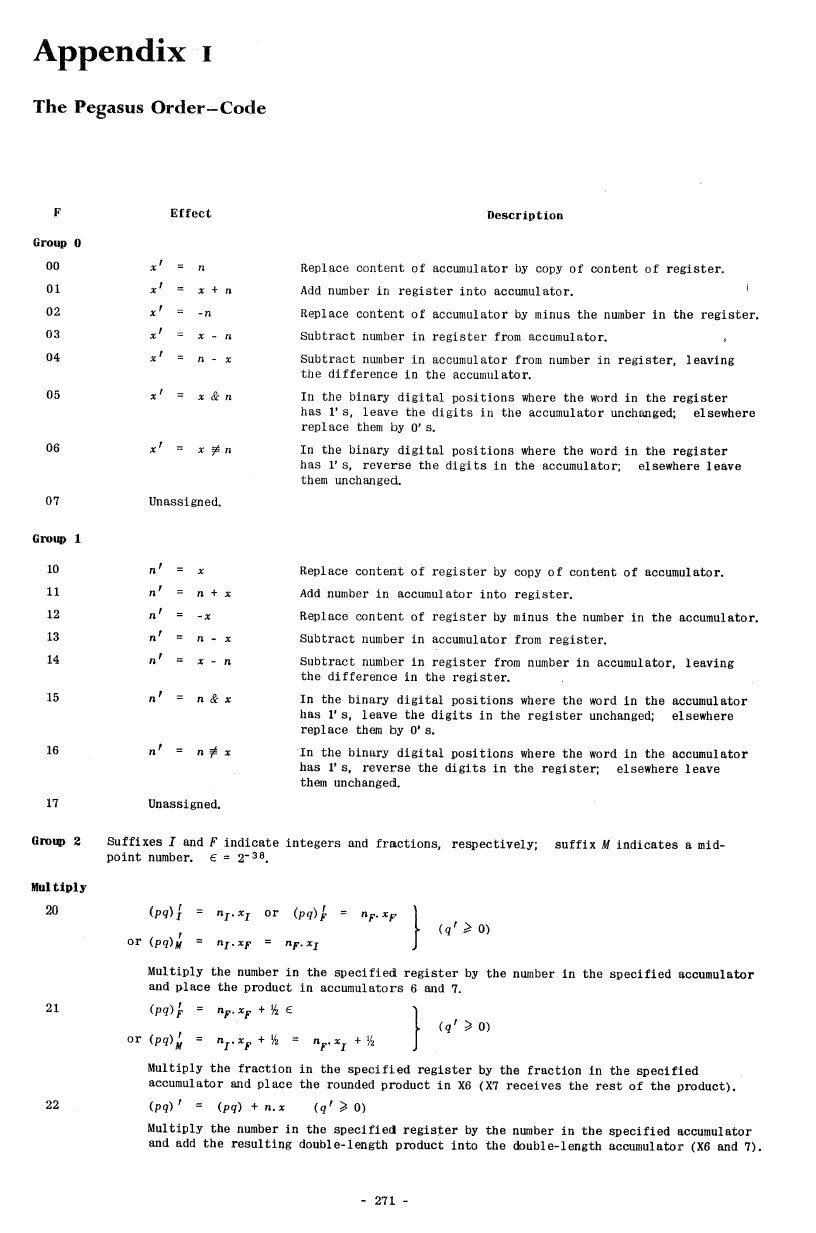
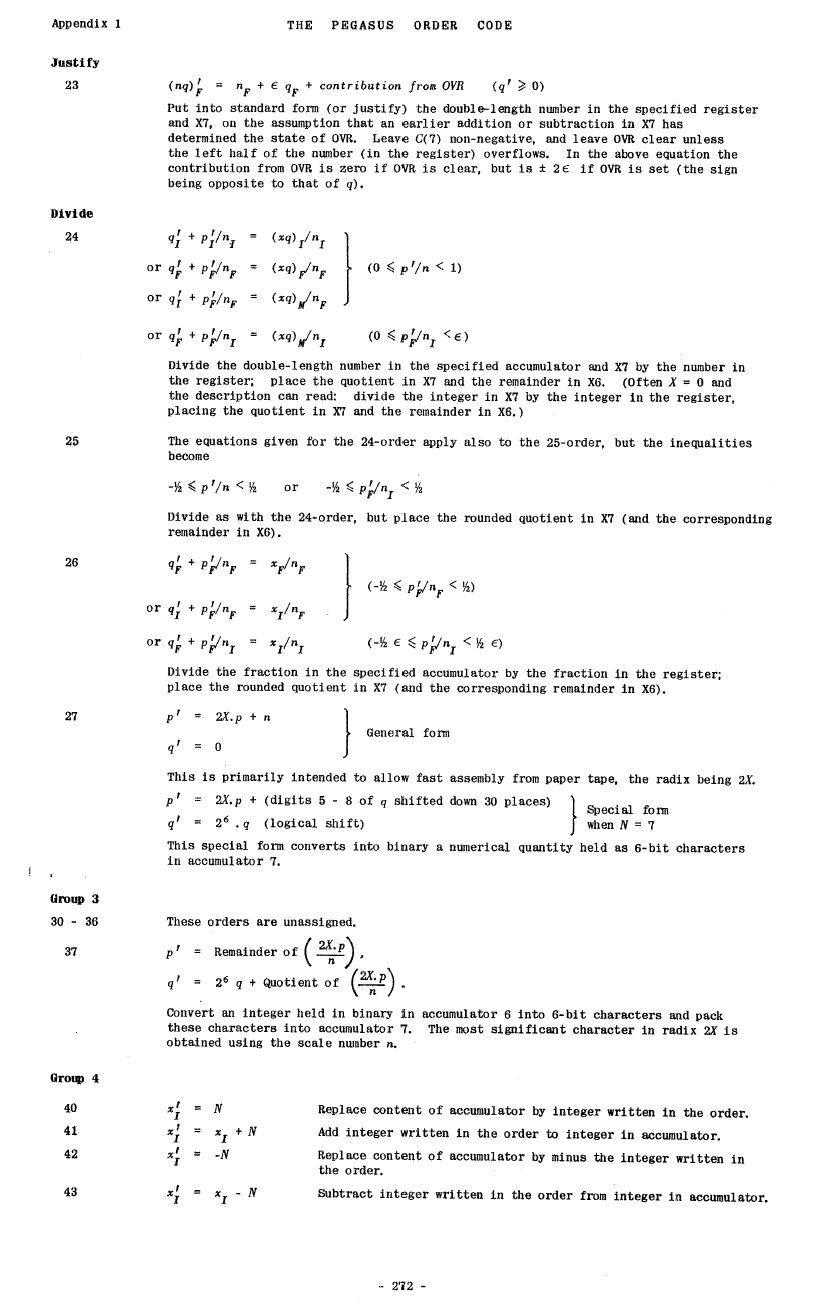
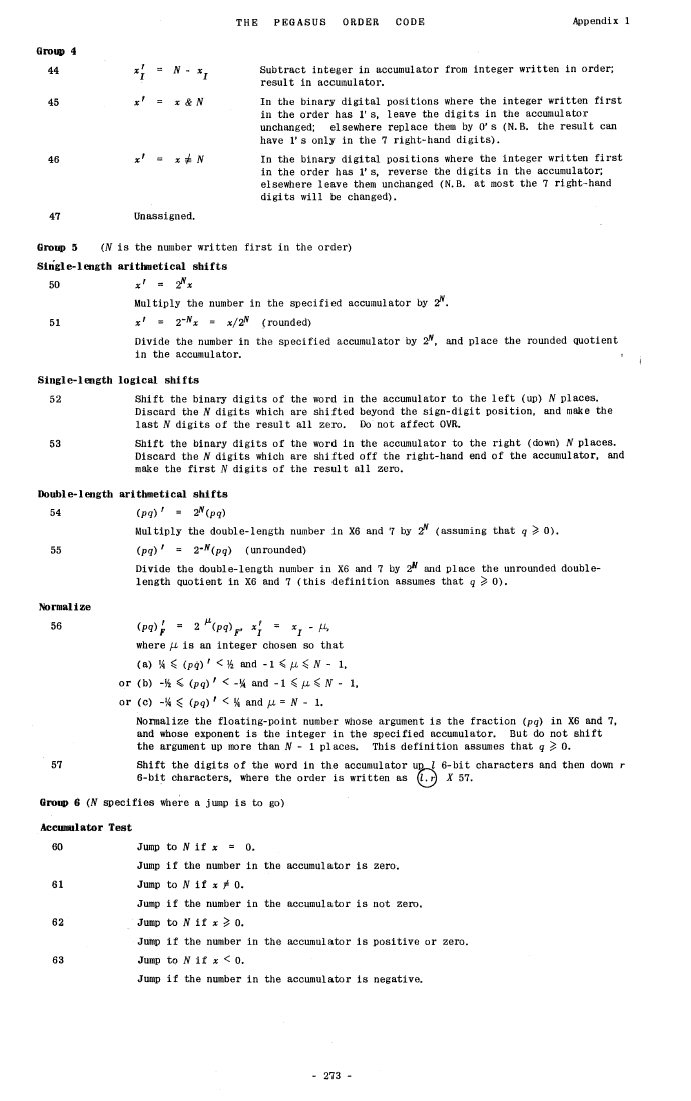
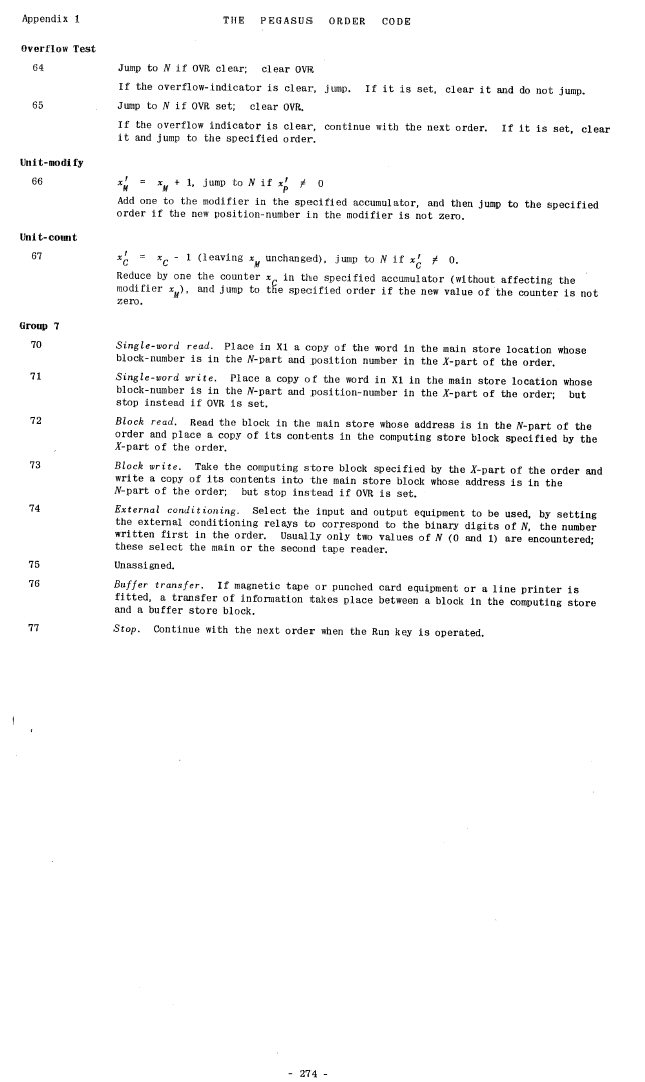
Given the Pegasus as a sacred object, its bible is surely George Felton's Programming manual,
published, late in its life, in 1962. It is available
here as a 32Mb pdf.
If you don't want
the whole thing, the order code is on pages
271,
272,
273, and
274.
George's manual is not a work for the faint-hearted dilettante, it is a carefully-written definitive exposition of exactly what programming the Pegasus means.
I say 'means' rather than 'meant', because you can run a Pegasus emulator on your PC. It's not quite the same as approaching the mighty creature with trembling hands, a dodgy program on paper tape, hoping to make good use of your ten minutes. Imagine, doing Start and Run, and seeing your tape run from the perspex container, across the reader and into the bin, as Hemingway said. That may be possible for some of us on the restored machine at the Science Museum. But anyone with a Windows PC, thanks to Chris Burton and Manchester University, can run programs on the Pegasus for himself. The Computer Conservation Society cherishes the Pegasus, which is briefly described here, and there is a Wikipedia article.
There is a nice little booklet on the Pegasus, written by one Professor Lavington. It's well worth a read, placing Pegasus in history, and describing hardware features. Regrettably, though, the prof has been ill-served by whoever prepared the programmming section for him. These pages are a regrettable travesty, and any reader puzzled by them (and that's anyone who doesn't already know the subject) should refer to my correct and lucid treatment of the same examples here.
I had a curious personal involvement in this, in early 2010. The CCS had organised a meeting in May 2010 to celebrate the 50th anniversary of the Pegasus. Alan Thomson had invited me to contribute a 20-minute talk on programming it. I gladly agreed, and he then suggested I look over Lavington's booklet, due for re-issue, and suggest any corrections. I gave Alan my suggestions in general, and on the programming pages in particular, and he passed them on to Lavington, whom I met briefly later on at a CCS meeting. I wrote to him after the meeting, asking for half an hour of his time so that we could resolve the problems. He refused my request, and I flounced off in a huff, deciding not to deliver the planned talk. Lavington's reaction is quite understandable I suppose: after all, he is a minor Somebody, while I am Nobody - like Odysseus in the cave, Nobody has dared to criticise my booklet.
Here is what looks like a thorough survey of computing in the 50s.
Finally, here is a description (perfectly genuine, Reader, I assure you) of the Pegasus delay line, in German: